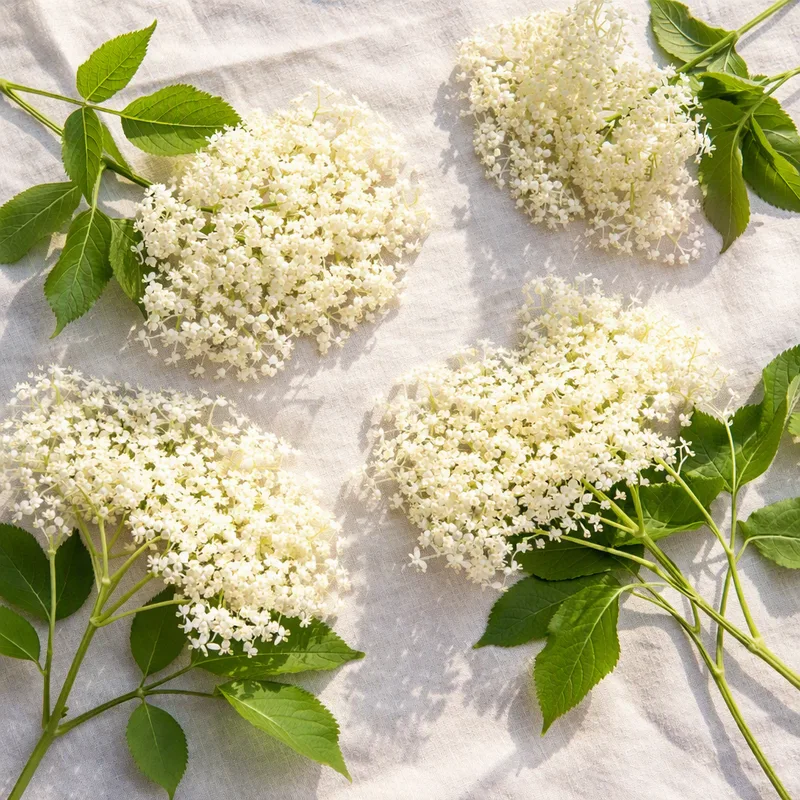
Elderflower – Classic – Guide & Ordering

Classic elderflower. Beautiful in a bouquet, as a gift or when you want to impress without any fuss.

Elderflower – Classic: The Scent of Early Summer

Few flowers say British countryside quite like elderflower. Every May and June the hedgerows foam with the creamy-white, plate-shaped flower heads of Sambucus nigra, and their sweet, slightly musky fragrance is unmistakable. The classic elderflower makes a wonderfully romantic addition to a bouquet: the tiny individual flowers are held in wide, lacy umbels that soften and lighten any arrangement. It sits beautifully beside garden roses, peonies, cow parsley and fresh green foliage, giving a natural, just-picked look.

A Short but Glorious Season

Elder flowers for only a few weeks in late spring and early summer, which is part of its charm. If you want elderflower in a bouquet, May and June are the months to ask for it; outside that window your florist will usually suggest something similar in feel, such as gypsophila or ammi. Because the flower heads are delicate, they are best used fresh and kept cool.

Care and Safety

Elderflower likes plenty of clean water and a cool spot away from direct sunlight and heat. Recut the stems on arrival and change the water regularly to keep the heads fresh and fragrant. One important note: elder is toxic to cats and dogs, so place the bouquet well out of reach if you have pets at home.

A Classic Gift for the Season

Classic elderflower is perfect for a June birthday, a summer wedding or simply to bring the scent of the hedgerow indoors. It's a flower that speaks of long evenings and homemade cordial, and it never fails to bring a smile.

Quick facts – Elderflower – Classic

Colour
white
Latin name
Sambucus nigra
Type
shrub
Flowering
june-july
Light
full sun to partial shade
Water
moderate
Height
300-600 cm
Scent
strong
Toxic to Pets
yes
Choose bouquet Learn about delivery & times

Delivery across the United Kingdom • Popular choices

FAQ about Elderflower – Classic

What kind of soil suits elder best?
Elder thrives in fertile, moist but well-drained soil with a neutral to slightly alkaline pH. The shrub is very adaptable and grows in most soils, including clay and sand. It flowers best in sun or light shade.
How often should elder be watered?
Established elder rarely needs extra water. In very dry spells, water deeply once a week. Newly planted shrubs need regular watering for the first two years until the root system is established.
When and how should elder be pruned?
Prune in late winter while the shrub is dormant. Remove dead, damaged and crossing branches, and cut a few of the oldest stems down to the base. Elder tolerates hard pruning and readily produces new shoots.
Which pests and diseases affect elder?
Elder is generally trouble-free. Black bean aphids can appear on young shoots in early summer but rarely harm the shrub seriously. Leaf spot can occur in very damp weather.
Can elderflowers be used for cordial?
Yes, the flowers are traditionally used for elderflower cordial and tea. Pick fully open flower heads on a dry, sunny day and use them the same day. Note that the leaves, bark, unripe berries and raw berries contain substances that can make you ill, so the ripe berries must be cooked before eating.

Recommended bouquets

Related flowers

🌸 Choose Bouquet