Sweet pea – Red – Guide & Ordering

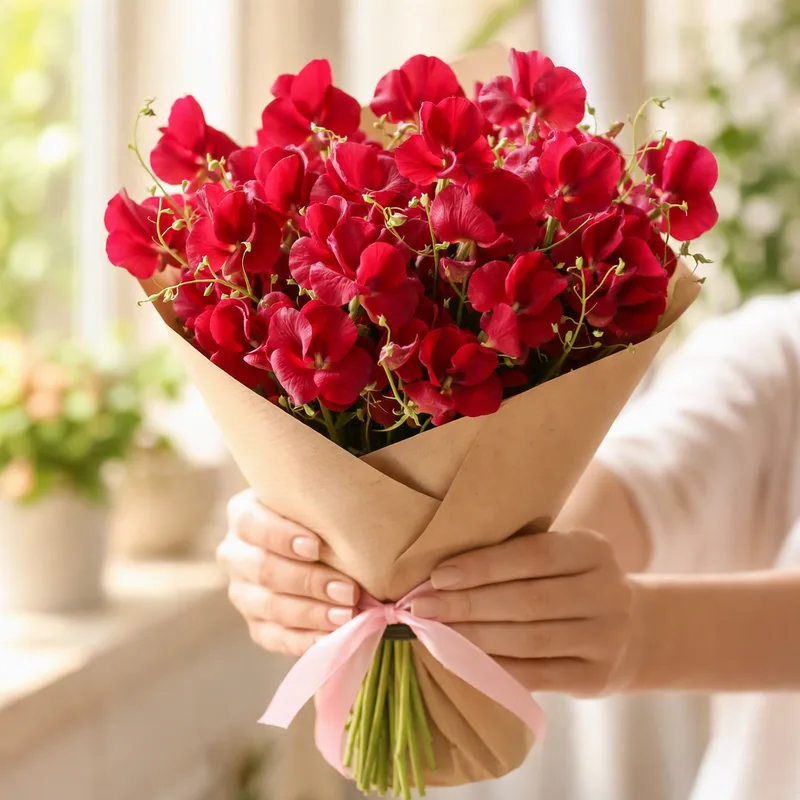
Red sweet peas. Ruffled petals and the strongest scent in the summer garden – as a bouquet, as a gift or for a table at home.

Sweet pea – Red, the scent of an English summer

Lathyrus odoratus has been grown in British gardens since the seventeenth century, and the red varieties are the ones people remember. The petals are thin as tissue and gently ruffled, the colour runs from deep crimson to a warm scarlet, and the scent is strong enough that a single small bunch is enough for a whole room.

Sweet peas are cut flowers with short stems, so they belong in a jug, a tumbler or a small vase rather than a tall arrangement. A bunch of red on its own is the classic; a few stems among white or pale pink softens the depth of the colour.

Season and vase life

The season runs from early summer into early autumn, and the flowers are at their best cut in the morning. Expect around five days in the vase – less than most cut flowers, which is the price of the scent. Cool water, a cool position away from fruit, and a fresh cut every couple of days will get the most out of them.

The more you pick, the more you get

Sweet peas are annual climbers, and picking them is what keeps them flowering: every stem cut before it sets seed pushes the plant to produce another. Gardeners cut them daily for that reason, which is also why they so often arrive as a gift from someone with a garden.

A gift with a scent attached

Red sweet peas suit a summer birthday, a thank you or a quiet romantic gesture, and they are a kinder choice than a formal bouquet when the room is small. One word of caution: the seeds and pods are toxic, so keep them out of reach of pets and small children.
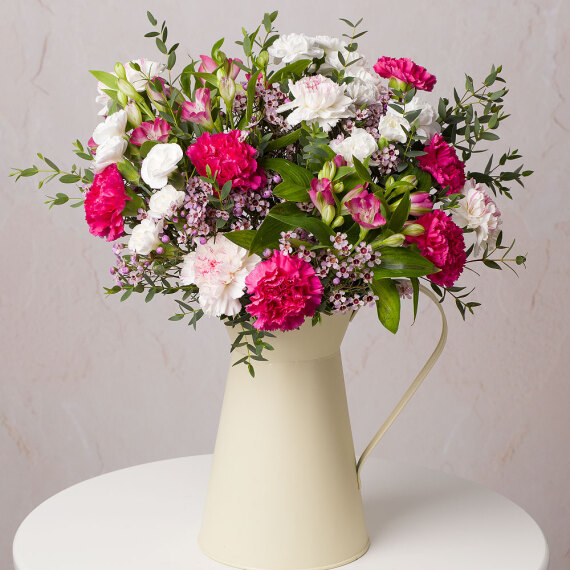
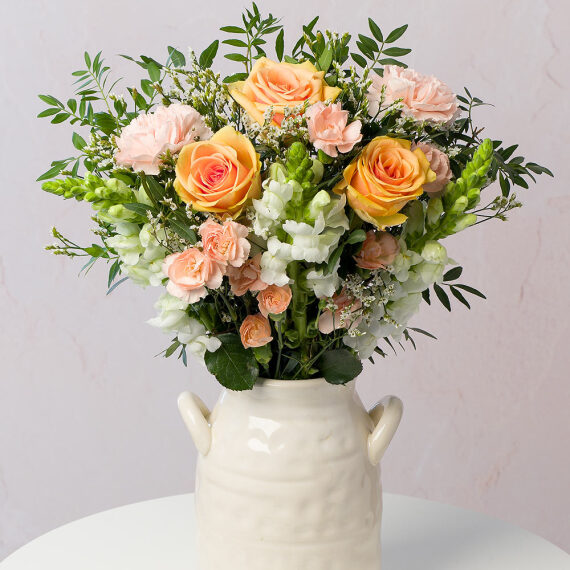
Quick facts – Sweet pea – Red

Colour
red
Latin name
Lathyrus odoratus
Type
cut flower
Flowering
june-august
Light
full sun
Water
moderate
Height
100-200 cm
Vase life
3-5 days
Scent
strong
Toxic to Pets
yes
Choose bouquet Learn about delivery & times

Delivery across the United Kingdom • Popular choices

FAQ about Sweet pea – Red

What kind of soil suits sweet peas best?
Sweet peas thrive in fertile, well-drained, humus-rich soil with a pH of 6.0-7.5. Dig in compost or well-rotted manure before sowing or planting. Avoid heavy clay that waterlogs around the roots.
How often should sweet peas be watered?
Water regularly to keep the soil evenly moist, especially in dry spells and while they are flowering. Water deeply at the base and never let the soil dry out completely, as stress makes the plants stop flowering.
Do sweet peas need deadheading?
Yes, the more you pick, the more they flower. Cut flowers for the vase regularly and remove faded flowers before they form seed pods. Give the plants netting or a wigwam of canes to climb.
Which pests and diseases can affect sweet peas?
Aphids may attack the young shoots and can be rinsed off or treated with insecticidal soap. Powdery mildew can appear in late summer, and slugs and snails love young seedlings, so protect them early on.
Can sweet peas be overwintered?
No, the sweet pea is an annual and dies after flowering or at the first frost. Collect ripe seeds from dry pods to sow the following year. Soaking the seeds overnight before sowing speeds up germination.

Recommended bouquets

Related flowers

🌸 Choose Bouquet