Houseleek – Pink – Guide & Ordering

Pink houseleek. Lovely in a pot, as a living gift or when you want to impress without any fuss.

Houseleek – Pink: A Timeless Beauty

Pink houseleek is a hardy little succulent that deserves a place in every plant lover's home. Its tight rosettes of fleshy, pointed leaves take on a soft rose-pink blush, strongest in full sun and cool weather, and named forms such as 'Pink Lemonade' and 'Rosie' are grown for precisely this colouring. Sempervivum means 'always alive', and the plant has thrived on cottage roofs, dry-stone walls and rockeries across Britain for centuries. Pink houseleek suits both modern and traditional settings and looks lovely in a terracotta bowl, a trough or a gravel bed.

Foliage First, Flowers in Summer

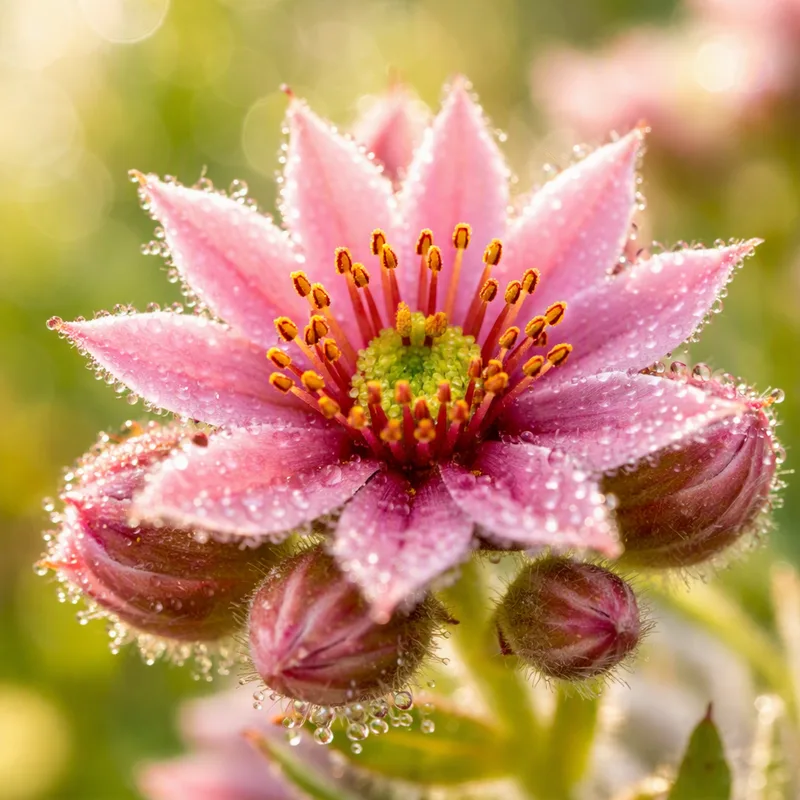
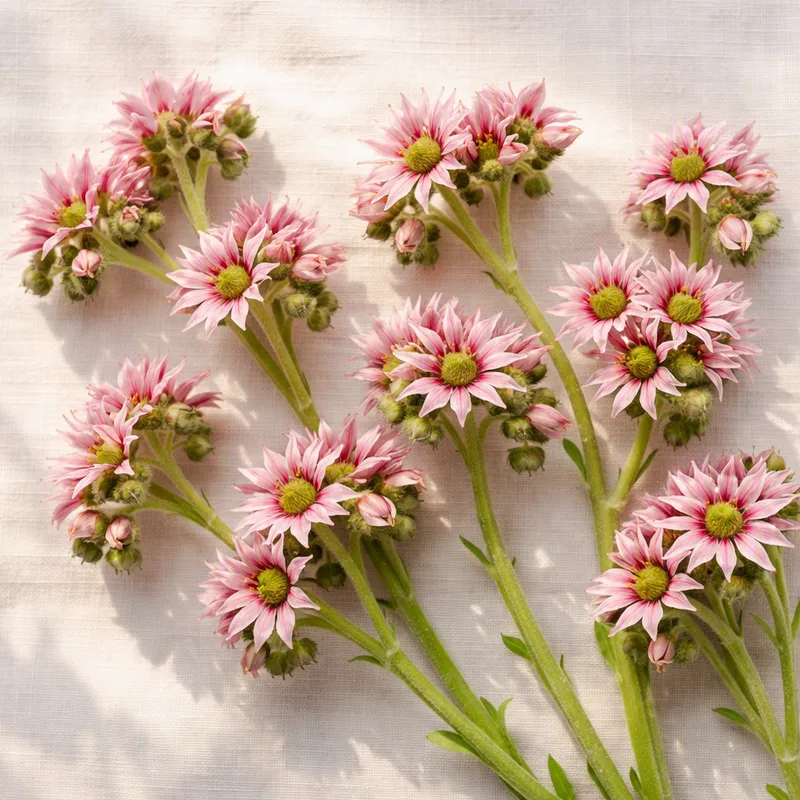
A houseleek is grown for its rosettes rather than its blooms. In summer a mature rosette may send up a stout stem crowned with star-shaped pink flowers; that rosette then dies, but the offsets around it carry on, so the plant simply keeps spreading. It has no scent, which makes it a good choice for anyone who finds floral perfume overwhelming.

How to Care for Your Houseleek

This is a plant that almost looks after itself. Give it a bright, sunny position, gritty free-draining compost and water only sparingly; too much water is the one thing that harms it. It happily stands outdoors all year, through frost, wind and rain. Pink houseleek is regarded as non-toxic to cats and dogs, so it can safely sit where pets roam.

A Gift That Keeps Growing

Unlike a bouquet, pink houseleek is a gift that lasts for years and slowly multiplies. It's perfect for a housewarming, a gardener's birthday or a small surprise for someone who prefers plants to flowers. Send pink houseleek and show that you care, with no effort required from the recipient.

Quick facts – Houseleek – Pink

Colour
pink
Latin name
Sempervivum
Type
garden perennial
Flowering
july-august
Light
full sun
Water
low
Height
5-20 cm
Scent
none
Toxic to Pets
no
Choose bouquet Learn about delivery & times

Delivery across the United Kingdom • Popular choices

FAQ about Houseleek – Pink

What kind of soil suits houseleeks best?
Houseleeks thrive in very well-drained, sandy or gritty soil. Avoid clay or soil that stays wet, as this causes rot. A mix of garden soil, sand and grit works very well, and they also grow on roofs, walls and in containers.
How often should houseleeks be watered?
Houseleeks need very little water and cope with long dry spells. Water only when the soil is completely dry, which in pots may be every week or two in summer. In winter they should be kept almost completely dry.
Do houseleeks need pruning?
Houseleeks need no regular pruning. Each rosette dies after flowering, so remove the dead rosette and flower stalk afterwards and the surrounding offsets will fill the gap. Offsets can also be removed and replanted to propagate the plant.
Which pests and diseases can affect houseleeks?
Houseleeks are very resistant to pests and diseases. The most common problem is rot caused by too much moisture. Vine weevil grubs can sometimes damage the roots of plants in pots.
Are houseleeks hardy?
Yes, houseleeks are fully hardy and stay outdoors all winter without protection. Winter wet is a greater danger than frost, so plants in pots should stand where the rain cannot soak them.

Recommended bouquets

Related flowers

🌸 Choose Bouquet